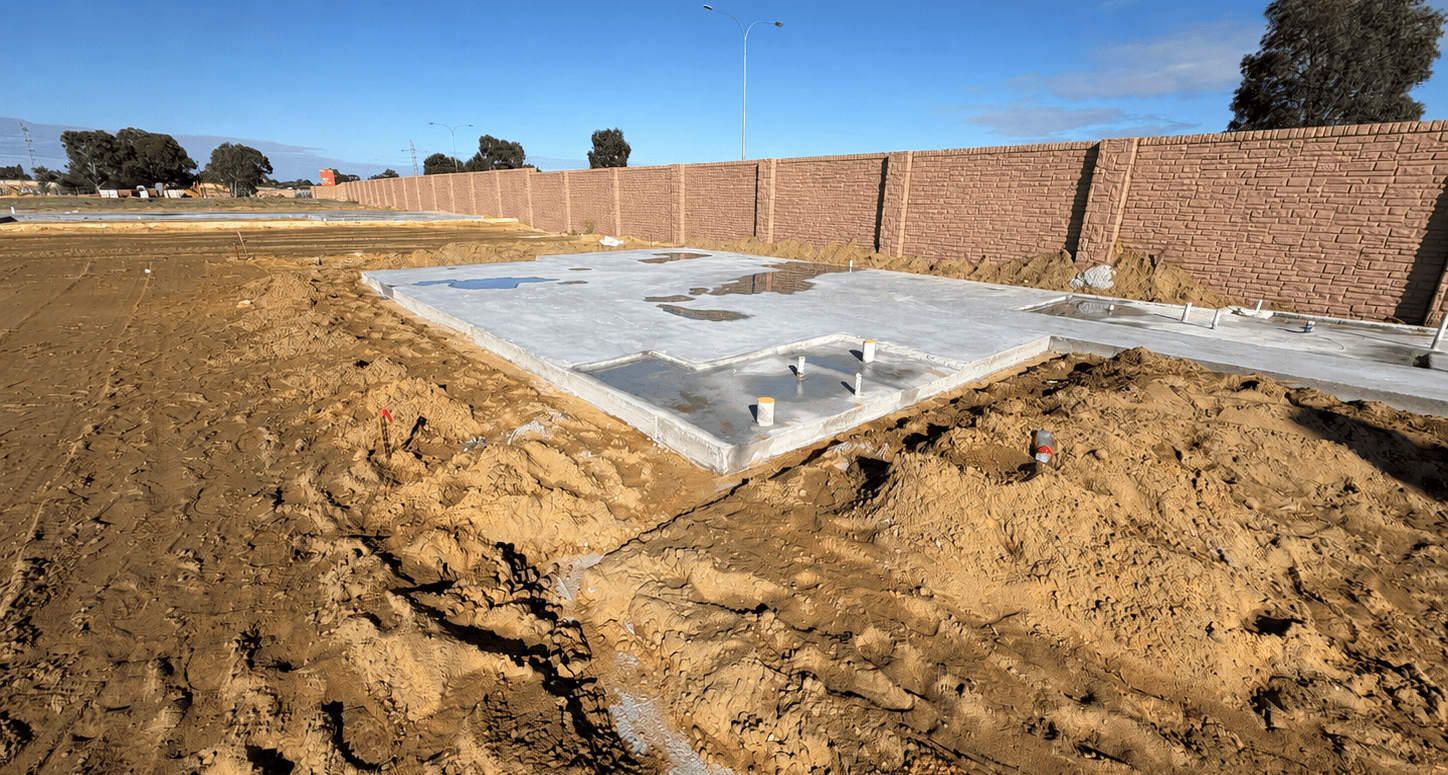
Plan Before the Pour
When it comes to a development build, staying on budget matters. Every decision contributes to the overall feasibility of the project, which is why getting the details right before construction begins is so important.
While changes can be relatively straightforward during the design stage, once construction starts, some decisions become much more difficult, and costly to change.
Some are quite literally set in concrete.
Before a ground floor slab is poured, plumbing locations need to be carefully planned and confirmed. Pipes for toilets, showers, sinks, kitchen fixtures and other plumbing are positioned within or beneath the slab based on the final floorplan.
Once that concrete is poured, changing your mind about the location of a toilet, vanity or kitchen sink isn’t a simple adjustment. It can mean cutting into concrete, altering pipework, additional labour and potentially delays, all of which can add unexpected costs to the development.
When margins matter, these are the types of variations you want to avoid.
The same applies to concrete suspended slabs, where there is another important consideration: electrical and lighting locations.
Before the suspended slab is poured, electrical conduits and provisions for lighting need to be positioned within the concrete. Downlight locations and other electrical requirements therefore need to be considered and confirmed ahead of the pour.
Once the slab is down, moving or adding these items can become difficult, costly or simply impractical.
Good development design isn’t only about creating a home that looks great or functions well. It’s also about making smart decisions early to help protect the budget throughout construction.
Thinking through layouts, plumbing, lighting, furniture placement and how the finished home will appeal to the target market before reaching these key construction stages can help minimise costly variations later.
Changes during construction don’t just affect one item on the plan. They can involve additional trades, materials, labour and time, with costs quickly adding up across a development.
The more you can resolve upfront, the fewer surprises you’re likely to encounter along the way.
Because in development, protecting your budget starts well before the concrete is poured especially when some decisions really are set in concrete.